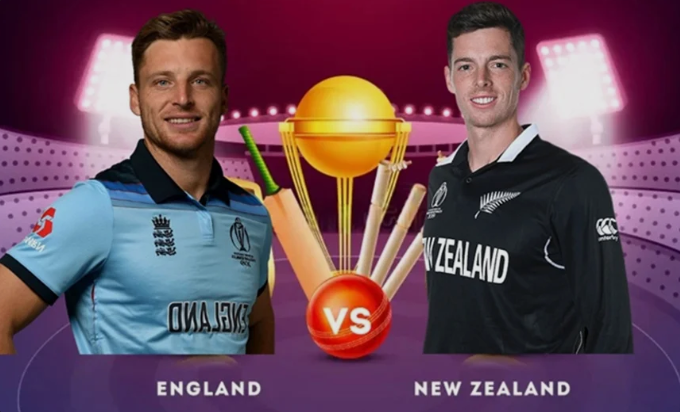
The rivalry between England and New Zealand has grown into one of the most tactically fascinating contests in international cricket. From the early Test matches dominated by England to the modern era where both teams trade wins across formats, the journey reflects evolution, adaptation, and shifting cricket philosophies. England brought structure, depth, and traditional dominance, while New Zealand built its identity through resilience, discipline, and smart cricket. Over decades, scorecards have moved from one sided results to tightly contested thrillers. This rivalry is not just about wins and losses but about contrasting cricket cultures colliding across generations in Tests, ODIs, and T20s.
Overall Head-to-Head Summary
Format
Total Matches
England Wins
New Zealand Wins
Ties / No Result
Draws
Test Matches
115
54
14
0
47
ODIs
94
41
45
4
—
T20 Internationals
31
17
10
4
—
Teams ICC Rankings
Format
England Position
England Rating
New Zealand Position
New Zealand Rating
Test
4th
102
5th
102
ODI
6th
98
2nd
113
T20I
2nd
262
4th
247
Test Match Stats
Statistic
England
New Zealand
Matches Won
54
14
Highest Team Total
539
615/9 dec
Lowest Team Total
58
26
Highest Run Chase
478
483
ODI Match Stats
Statistic
England
New Zealand
Matches Won
41
45
Highest Team Total
408
398
Lowest Team Total
89
134
Highest Run Chase
349
335
T20 International Stats
Statistic
England
New Zealand
Matches Won
17
10
Highest Team Total
241/3
202/5
Lowest Team Total
128
103
Most Runs Overall
Eoin Morgan (428)
Martin Guptill (463)
Rivalry Origins and Early Encounters
The rivalry between England and New Zealand began in the early Test era when England dominated world cricket and New Zealand were still building their international identity. Early matches were heavily tilted in England’s favor due to stronger batting depth and experienced fast bowlers. However, New Zealand’s resilience slowly became a defining trait. Even when losing, they forced England to work hard for victories. Scorecards from this period often show low scoring draws or England winning by small margins. These matches built the emotional foundation of the rivalry, where New Zealand earned respect not through wins but through resistance and determination.
Season
Format
Winner
Key Performance
Margin
1930s
Test
England
Hammond 200+ runs
Innings win
1940s
Test
England
Hutton solid batting
6 wickets
1950s
Test
Draw
New Zealand bowling effort
Draw
1960s
Test
England
Dexter all-round show
8 wickets
Scorecard Battles in Classic Test Era
During the classic Test era, the rivalry became more competitive as New Zealand improved their bowling attack and batting partnerships. England still held an advantage at home, but tours to New Zealand became challenging due to slower pitches and disciplined Kiwi bowling. Scorecards show more draws and closely fought results. Players like Richard Hadlee began changing the balance, troubling England’s top order with consistent swing and seam movement. England’s batting relied heavily on technique, while New Zealand focused on patience and building pressure over long sessions. This era established the rivalry as more than one-sided competition, setting the stage for modern balance.
Season
Format
Winner
Key Performance
Margin
1978
Test
NZ
Hadlee 5 wickets
5 wickets
1983
Test
England
Gower century
7 wickets
1986
Test
NZ
Crowe batting masterclass
3 wickets
1990
Test
Draw
Both teams balanced
Draw
ODI Evolution and Changing Momentum
The ODI format transformed the rivalry into a faster and more unpredictable contest. New Zealand adapted quickly with innovative strategies, strong fielding, and intelligent bowling changes. England initially struggled with consistency but improved through aggressive batting approaches. Scorecards from the 1990s and early 2000s show frequent momentum shifts, with both teams winning series at home. New Zealand’s ability to chase targets under pressure became a key strength. England responded by developing explosive top-order batsmen. This era also introduced more close finishes, where final overs decided matches, making the rivalry more entertaining for fans and statistically balanced over time.
Season
Format
Winner
Key Performance
Margin
1992
ODI
NZ
Crowe captaincy impact
4 wickets
1996
ODI
England
Thorpe anchor innings
5 runs
2004
ODI
NZ
Fleming tactical win
3 wickets
2010
ODI
England
Morgan aggressive batting
6 wickets
World Cup Clashes and Pressure Moments
World Cup encounters between England and New Zealand have produced some of the most intense cricket moments. These matches are remembered for pressure situations rather than just statistics. New Zealand often excelled in handling knockout pressure, while England faced criticism for inconsistent tournament performances until their 2019 breakthrough. Scorecards highlight dramatic chases, collapses, and last over finishes. The emotional weight of ICC tournaments elevated the rivalry, especially during high stakes knockout matches. New Zealand’s calm approach contrasted with England’s evolving aggression, making these clashes iconic in cricket history.
Season
Format
Winner
Key Performance
Margin
2015 WC
ODI
NZ
Boult swing dominance
8 wickets
2019 WC
ODI
Draw
Super Over drama
Tie
2019 WC Final
ODI
England
Stokes clutch innings
Boundary rule
2023 WC
ODI
NZ
Williamson steady knock
5 runs
Test Cricket Modern Rivalry Shift
Modern Test cricket between England and New Zealand has become highly competitive, with both teams adopting aggressive yet strategic approaches. England’s Bazball era introduced ultra attacking batting, changing traditional Test scorecards dramatically. New Zealand responded with disciplined bowling and structured batting led by Kane Williamson. Matches now produce results more frequently, reducing draws and increasing excitement. England’s scoring rate often pressures opposition bowlers, while New Zealand relies on consistency and long partnerships. This balance of aggression and control defines the modern rivalry, making every Test series unpredictable and highly competitive.
Season
Format
Winner
Key Performance
Margin
2018
Test
NZ
Boult & Southee swing
4 wickets
2021
Test
Draw
Even contest
Draw
2022
Test
England
Root consistency
5 wickets
2023
Test
Balanced
Bazball impact
Close
ODI and T20 Tactical Battles
In white ball cricket, both teams have developed distinct identities. England focuses on power hitting, deep batting lineups, and high strike rates. New Zealand emphasizes game awareness, smart bowling changes, and disciplined fielding. T20 matches often swing rapidly, with scorecards showing explosive starts and dramatic collapses. England’s depth allows them to recover from early wickets, while New Zealand’s control in middle overs often decides outcomes. These tactical contrasts make every limited overs match unpredictable and highly entertaining. Recent years have seen closely fought finishes, reflecting how evenly matched both sides have become.
Season
Format
Winner
Key Performance
Margin
2016
T20
England
Roy explosive batting
7 wickets
2019
T20
NZ
Boult death bowling
14 runs
2021
T20
England
Buttler match win
6 wickets
2023
ODI
NZ
Phillips fielding impact
5 runs
Conclusion
The England vs New Zealand cricket rivalry stands today as a symbol of balance and modern competitiveness. What once began as a heavily one sided contest has transformed into a finely matched battle where every format produces unpredictable outcomes. England’s aggressive evolution and New Zealand’s disciplined consistency have created a rivalry defined by narrow margins, iconic performances, and unforgettable scorecards. Whether it is a World Cup clash, a Test series battle, or a T20 finish under pressure, both teams continue to push each other higher. This rivalry will remain a key part of cricket history, shaped by respect, intensity, and constant reinvention.