Table of Contents
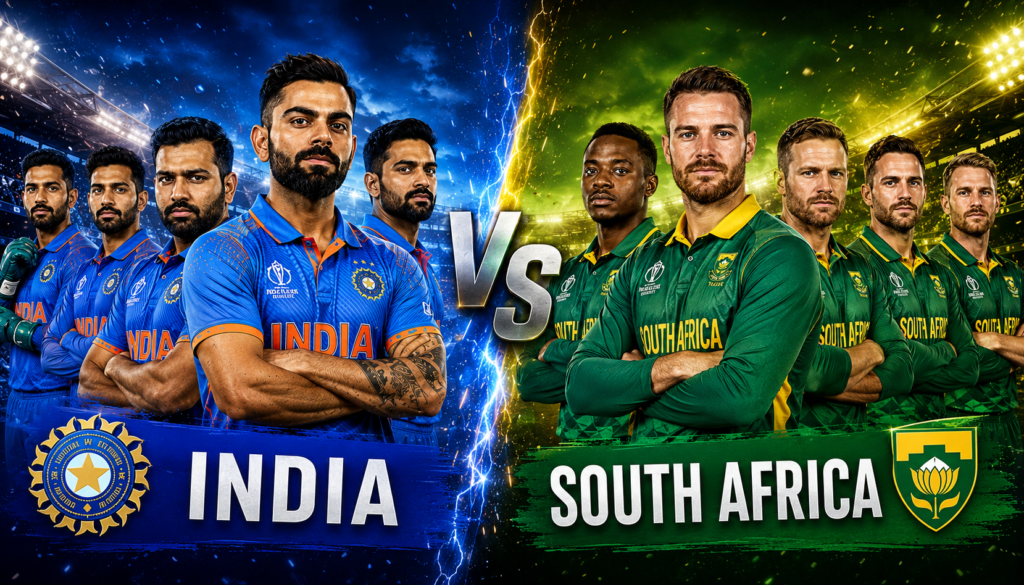
The cricket rivalry between the two sides has always carried a special intensity that goes beyond ordinary competition. Every time these teams meet, the contest reflects a battle of contrasting styles, with one team known for pace and aggression while the other relies on discipline and technique. Over the years, their encounters have produced unforgettable moments, dramatic collapses, and match-winning performances from star players. Fans from both nations treat these matches as emotional events, where every ball can change the outcome. From early clashes to modern high-pressure games, this rivalry has grown into one of the most respected and closely followed stories in international cricket history.
Recent Matches Table
| Match | Date | Format | Venue | Winner | Margin | Scorecard |
|---|---|---|---|---|---|---|
| India vs South Africa | 2026-02-22 | T20I | Ahmedabad | South Africa | 76 runs | SA 187, IND 111 |
| India vs South Africa | 2025-12-19 | T20I | Ahmedabad | India | 30 runs | IND 231/5, SA 201/8 |
| India vs South Africa | 2025-12-17 | T20I | Lucknow | Abandoned | No result | Match cancelled |
| India vs South Africa | 2025-12-14 | T20I | Dharamsala | India | 7 wickets | SA 117, IND 120/3 |
| India vs South Africa | 2025-12-01 | ODI | Johannesburg | India | 17 runs | IND 295, SA 278 |
| India vs South Africa | 2024-06-29 | T20I | Bridgetown | India | 7 runs | IND 176/7, SA 169/8 |
| India vs South Africa | 2024-01-04 | Test | Cape Town | India | 7 wickets | SA 55 & 176, IND 153 & 80/3 |
Team Statistics Summary Table
| Format [1] | Total Matches | India Wins | South Africa Wins | Tied Matches | No Result | Win Percentage India |
|---|---|---|---|---|---|---|
| Test Matches | 44 | 16 | 18 | 0 | 10 | 36.36 |
| One Day Internationals | 94 | 40 | 51 | 0 | 3 | 42.55 |
| Twenty20 Internationals | 31 | 19 | 11 | 0 | 1 | 61.29 |
| ICC World Cup (ODI) | 6 | 3 | 3 | 0 | 0 | 50.00 |
| ICC T20 World Cup | 7 | 5 | 2 | 0 | 0 | 71.42 |
| Matches in India (Overall) | 78 | 42 | 31 | 0 | 5 | 53.84 |
| Matches in South Africa | 86 | 28 | 52 | 0 | 6 | 32.55 |
Individual Batting Records Table
| Player [2] | Team | Matches | Innings | Total Runs | Highest Score | Batting Average |
|---|---|---|---|---|---|---|
| Sachin Tendulkar | India | 84 | 93 | 3741 | 200 | 43.50 |
| Virat Kohli | India | 68 | 74 | 3105 | 254 | 48.51 |
| Jacques Kallis | South Africa | 61 | 79 | 2911 | 201 | 42.18 |
| Rohit Sharma | India | 59 | 66 | 2453 | 212 | 40.21 |
| Hashim Amla | South Africa | 51 | 62 | 2415 | 253 | 44.72 |
| AB de Villiers | South Africa | 55 | 63 | 2389 | 217 | 43.43 |
| Rahul Dravid | India | 54 | 68 | 2252 | 148 | 36.32 |
Individual Bowling Records Table
| Player | Team | Matches | Innings | Overs Bowled | Total Wickets | Best Bowling |
|---|---|---|---|---|---|---|
| Anil Kumble | India | 52 | 68 | 1142.3 | 111 | 6/53 |
| Dale Steyn | South Africa | 34 | 52 | 824.1 | 105 | 7/51 |
| Shaun Pollock | South Africa | 48 | 61 | 945.5 | 98 | 6/56 |
| Javagal Srinath | India | 35 | 47 | 712.4 | 88 | 6/76 |
| Harbhajan Singh | India | 38 | 54 | 891.2 | 84 | 7/87 |
| Morne Morkel | South Africa | 31 | 48 | 654.0 | 79 | 5/20 |
| Kagiso Rabada | South Africa | 28 | 42 | 511.3 | 74 | 5/34 |
Rivalry Foundation and Early Encounters
The early phase of this international rivalry began when two contrasting cricket cultures first met on the global stage. One side brought aggressive pace bowling and disciplined fielding, while the other relied on technical batting and spin variation. These early encounters were defined by adjustment periods, where batters struggled to read express pace and bowlers learned to adapt to subcontinental patience. The matches were closely fought, often swinging with a single partnership or a burst of wickets in the middle overs. Over time, both teams developed mutual respect as competition intensity increased. Fans quickly realized that every encounter carried unpredictability, especially in different playing conditions. This phase laid the foundation for a rivalry built on skill evolution, mental strength, and tactical awareness, where neither side dominated consistently, but both pushed each other toward higher performance standards in every meeting.
| Match Format | Key Feature | Dominant Strength | Turning Point Factor | Match Intensity |
| Test | Long battles | Fast bowling | Session control | High |
| ODI | Balanced play | Batting depth | Middle overs | Very High |
| T20 | Fast scoring | Power hitting | Death overs | Extreme |
| ICC Events | Pressure | Fielding sharp | Clutch moments | Maximum |
Rise of Competitive Pressure in Global Tournaments
As time progressed, encounters in global tournaments elevated the intensity between the two sides. ICC events became the true testing ground where pressure, expectations, and execution combined under massive global audiences. Players from both teams often delivered career-defining performances in these matches. The momentum frequently shifted multiple times within a single game, especially when early wickets or rapid scoring bursts changed the balance. Fielding standards improved dramatically, with both sides saving crucial runs in tight situations. Tactical decisions such as bowling changes and batting order adjustments often proved decisive. Fans began associating this rivalry with unpredictability, as no target felt safe and no total seemed impossible. The psychological aspect also grew stronger, with players acknowledging that handling pressure was just as important as skill execution in determining match outcomes.
| Tournament Type | Pressure Level | Key Strength | Common Outcome Pattern | Decisive Factor |
| World Cup | Very High | Batting | Close finishes | Chasing ability |
| Champions Trophy | High | Bowling | Low scoring games | Wicket bursts |
| Bilateral Series | Medium | Balance | Alternating wins | Consistency |
| T20 World Cup | Extreme | Powerplay | Last over results | Death bowling |
Iconic Batting Clashes Across Generations
One of the most defining aspects of this rivalry has been the battle between elite batters and world-class bowling attacks. In earlier years, technically strong batters faced relentless pace and bounce, requiring immense focus and adaptability. Over generations, batting styles evolved to include more aggression, innovative stroke play, and improved strike rotation. Bowlers responded with variations in speed, swing, and seam movement. These head-to-head battles often determined match direction, especially when top-order players settled in and built long partnerships. Middle-order resilience also played a crucial role in recovery situations. The rivalry became a showcase of skill refinement, where every generation brought new strategies to counter evolving challenges. Fans witnessed iconic innings that not only won matches but also shaped the identity of this competitive fixture.
| Batting Phase | Style Focus | Challenge Type | Success Factor | Impact Level |
| Powerplay | Attack | Swing bowling | Timing | High |
| Middle Overs | Stability | Spin control | Rotation | Very High |
| Death Overs | Acceleration | Yorkers | Power hitting | Extreme |
| Test Format | Patience | Long spells | Technique | Critical |
Fast Bowling Dominance and Batting Resistance
Fast bowling has always been a central force in shaping match outcomes. The pace attack from one side consistently tested batting technique with bounce, swing, and reverse movement. Batters had to rely on footwork, judgment, and patience to survive challenging spells. On the other side, resistance came through partnerships and controlled aggression rather than reckless shot-making. Bowlers aimed to break partnerships early, while batters focused on minimizing damage during peak bowling phases. This tactical battle created several memorable sessions where momentum shifted rapidly. The intensity of short-ball strategies and late movement deliveries made every over crucial. Over time, both sides improved their adaptability, resulting in more balanced contests and longer competitive phases in matches.
| Bowling Type | Key Skill | Batting Response | Risk Factor | Effectiveness |
| Fast Swing | Movement | Defensive play | High | Very High |
| Short Ball | Bounce | Hook/leave | Medium | High |
| Reverse Swing | Late movement | Caution | High | Extreme |
| Seam Bowling | Accuracy | Rotation | Medium | High |
Spin Strategies and Middle Order Battles
Spin bowling played a decisive role in controlling match tempo, especially in subcontinental conditions. Spinners focused on building pressure through tight lines and subtle variations. Middle-order batters were often forced into defensive approaches, leading to mistakes under sustained pressure. The battle between spin and patience became one of the most tactical aspects of this rivalry. Captains frequently relied on spin during middle overs to slow scoring rates and force errors. Batters who succeeded in rotating strike often shifted momentum back in their favor. This phase of play highlighted the importance of game awareness, shot selection, and mental discipline. Matches were often decided in this middle phase when scoring rates either collapsed or accelerated based on spin effectiveness.
| Spin Type | Control Area | Batter Challenge | Pressure Build | Match Influence |
| Off Spin | Middle stump | Defensive play | High | Strong |
| Leg Spin | Turn variation | Shot selection | Very High | Game changing |
| Slow Left | Flight control | Timing | Medium | Moderate |
| Arm Ball | Surprise | Misjudgment | High | High |
Momentum-Shifting Matches and Turning Points
Several matches in this rivalry history have been defined by dramatic momentum shifts. A strong start from one team often collapsed under sudden wicket bursts or explosive batting counterattacks. These turning points created unforgettable cricket moments where the outcome remained uncertain until the final overs. Fielding errors, brilliant catches, and last-minute partnerships often decided results. Players who handled pressure situations became match heroes, while small mistakes led to big consequences. These encounters showcased the unpredictable nature of the rivalry, where form and ranking often mattered less than execution on the day. Fans remember these matches for emotional swings rather than just statistics, as each turning point reshaped the entire game narrative.
| Turning Moment | Scenario | Impact | Match Result Influence | Emotional Level |
| Early Wickets | Powerplay collapse | High | Strong shift | Very High |
| Big Partnership | Recovery phase | Very High | Momentum change | Extreme |
| Fielding Error | Dropped catch | Medium | Critical swing | High |
| Death Overs | Final overs finish | Extreme | Match deciding | Maximum |
Tactical Evolution and Modern Era Adjustments
In the modern era, both sides have adapted their strategies significantly. Batting has become more aggressive, with emphasis on power hitting and strike rate management. Bowling strategies now include data-driven field placements and variation-heavy approaches. Teams study opposition patterns closely, leading to highly analytical match preparation. Flexibility in batting order and bowling combinations has become crucial. Death-over execution and powerplay dominance now often decide match outcomes. This evolution has made contests more dynamic and unpredictable, with even small tactical decisions influencing final results. The rivalry continues to grow in intensity as both teams adapt to modern formats and evolving playing conditions.
| Tactical Area | Modern Approach | Key Innovation | Success Factor | Outcome Impact |
| Batting Order | Flexible slots | Role rotation | Adaptability | High |
| Bowling Plan | Data analysis | Matchups | Accuracy | Very High |
| Field Setup | Dynamic shifts | Opposition read | Anticipation | High |
| Death Overs | Variation use | Yorkers/slower | Execution | Extreme |
Conclusion
This rivalry has evolved into a symbol of high-quality international cricket, where skill, strategy, and temperament are tested at the highest level. Each match has added a new chapter filled with tension, brilliance, and unforgettable performances. Players from both sides have left their mark through iconic innings and decisive bowling spells. The competition continues to grow stronger with every series, reflecting changing eras of cricket. Fans still eagerly anticipate every encounter, knowing that no result is predictable. In the end, this rivalry stands as a reminder of how sport can unite passion, pressure, and excellence on a global stage.
FAQs
1. Why is this rivalry considered so competitive?
Because both teams bring different strengths, creating balanced and unpredictable matches every time they meet.
2. Which format has produced the most exciting matches?
One Day Internationals and T20 matches have produced the most thrilling and closely fought encounters.
3. What makes fast bowling important in this rivalry?
Fast bowlers often dominate early phases, making it difficult for top-order batters to settle.
4. How do spin bowlers impact these matches?
Spin bowlers control the middle overs and often create pressure that leads to wickets.
5. Why do fans enjoy these matches so much?
Fans enjoy the emotional intensity, close finishes, and high-quality performances from world-class players on both sides.