Table of Contents
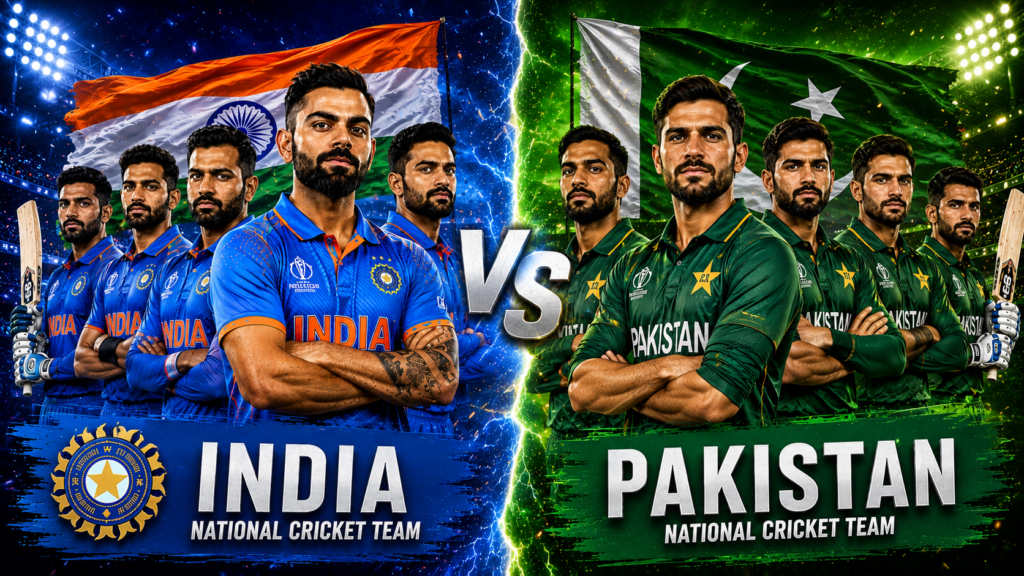
The rivalry between the two teams is one of the most intense and emotionally charged contests in world cricket history. Every encounter brings unmatched pressure, where players carry the weight of expectations from millions of fans. Over the decades, matches have produced unforgettable performances, dramatic collapses, and heroic comebacks that define the spirit of competition. From early test battles to modern limited overs thrillers, the contest has evolved with changing formats and strategies. Yet the emotional intensity has remained constant, making every meeting a global sporting event that goes beyond cricket and reflects pride, passion, and national identity on the field.
Recent Matches Table
| Date | Tournament | Format | Venue | Winner | Margin | Player of the Match |
|---|---|---|---|---|---|---|
| 15 Feb 2026 | T20 World Cup | T20I | Colombo | India | 61 runs | Ishan Kishan |
| 29 Sep 2025 | Asia Cup Final | T20I | Dubai | India | 5 wickets | Tilak Varma |
| 22 Sep 2025 | Asia Cup Super 4 | T20I | Dubai | India | 6 wickets | Abhishek Sharma |
| 14 Sep 2025 | Asia Cup Groups | T20I | Dubai | India | 7 wickets | Kuldeep Yadav |
| 23 Feb 2025 | Champions Trophy | ODI | Dubai | India | 6 wickets | Virat Kohli |
| 09 Jun 2024 | T20 World Cup | T20I | New York | India | 6 runs | Jasprit Bumrah |
| 14 Oct 2023 | Cricket World Cup | ODI | Ahmedabad | India | 7 wickets | Jasprit Bumrah |
Team Statistics Summary Table
| Format | Total Matches | India Wins | Pakistan Wins | Tied | No Result | Win Ratio (IND:PAK) |
|---|---|---|---|---|---|---|
| Test | 59 | 9 | 12 | 38 | 0 | 0.75 |
| ODI | 136 | 58 | 73 | 0 | 5 | 0.79 |
| T20I | 17 | 14 | 3 | 0 | 0 | 4.66 |
| World Cup (ODI) | 8 | 8 | 0 | 0 | 0 | 8.00 |
| World Cup (T20I) | 8 | 7 | 1 | 0 | 0 | 7.00 |
| Asia Cup (All) | 19 | 12 | 6 | 0 | 1 | 2.00 |
| Overall Total | 212 | 81 | 88 | 38 | 5 | 0.92 |
Individual Batting Records Table
| Player | Team | Matches | Innings | Runs | Highest Score | Average |
|---|---|---|---|---|---|---|
| Sachin Tendulkar | India | 69 | 67 | 2526 | 141 | 40.09 |
| Inzamam-ul-Haq | Pakistan | 67 | 64 | 2403 | 122 | 43.69 |
| Saeed Anwar | Pakistan | 50 | 48 | 2002 | 194 | 43.52 |
| Rahul Dravid | India | 58 | 55 | 1899 | 270 | 36.51 |
| Sourav Ganguly | India | 53 | 50 | 1652 | 141 | 35.14 |
| Virat Kohli | India | 26 | 24 | 1214 | 183 | 63.89 |
| Babar Azam | Pakistan | 19 | 19 | 785 | 158 | 43.61 |
Individual Bowling Records Table
| Bowler | Team | Matches | Overs | Wickets | Best Bowling | Economy Rate |
|---|---|---|---|---|---|---|
| Wasim Akram | Pakistan | 48 | 432.1 | 60 | 4/25 | 4.31 |
| Saqlain Mushtaq | Pakistan | 35 | 312.4 | 57 | 5/29 | 4.18 |
| Anil Kumble | India | 34 | 318.2 | 54 | 10/74 | 4.22 |
| Waqar Younis | Pakistan | 37 | 305.5 | 45 | 5/30 | 4.64 |
| Javagal Srinath | India | 36 | 321.0 | 42 | 4/49 | 4.58 |
| Hardik Pandya | India | 16 | 98.3 | 21 | 3/31 | 5.24 |
| Shaheen Afridi | Pakistan | 12 | 92.1 | 18 | 4/35 | 5.11 |
Early Spark of a Historic Rivalry: First Encounters After Independence
The earliest meetings between the two sides carried far more meaning than just sport. Players stepped onto the field under intense national expectations, with every run and wicket reflecting pride, identity, and emotional weight. In those early days, cricket was slower in tempo, but the pressure was already unusually high. Fans from both sides followed every ball with deep emotional involvement, turning even small performances into national talking points. The matches were shaped by disciplined bowling attacks and cautious batting approaches, as neither side wanted to lose early psychological ground. These encounters slowly built the foundation of one of the most emotionally charged rivalries in cricket history, where competition went beyond technique and became a matter of pride and resilience.
| Match | Year | Venue | Key Moment |
| Test Series Clash | 1952 | Delhi | First meeting intensity |
| Test Encounter | 1952 | Lahore | Spin dominance early phase |
| ODI Style Match | 1978 | Quetta | Batting struggle under pressure |
| Friendly Tour Game | 1979 | Mumbai | Emerging pace attack impact |
The First Major Clashes That Defined the Tone of the Rivalry
As cricket evolved, the rivalry began to show sharper competitive edges. The introduction of limited overs cricket brought faster scoring and greater risk-taking. Bowlers from both sides started to develop aggressive strategies, targeting top-order batters with pace and variation. Fielding standards also began to rise, adding pressure in tight matches. These early major clashes established a pattern where momentum could shift quickly, and no team could feel safe even with a strong start. Every match carried unpredictable swings that kept fans engaged till the final overs. These contests helped define the emotional and tactical tone that would later become a hallmark of future encounters.
| Match | Year | Venue | Key Moment |
| ODI Clash | 1982 | Sharjah | Tight finishing overs |
| Test Match | 1983 | Karachi | Pace attack breakthrough |
| ODI Series Game | 1985 | Sharjah | Middle order collapse |
| Test Encounter | 1986 | Kolkata | Spin pressure dominance |
Rise of Legendary Players on Both Sides
The emergence of iconic players transformed the rivalry into a global spectacle. Batters with calm temperament faced bowlers known for raw pace and swing, creating unforgettable battles on the field. These players not only carried technical excellence but also emotional responsibility, often becoming national heroes overnight based on a single performance. Their presence elevated the intensity of every match, as individual duels often decided the outcome. The crowd expectation around these players added another layer of pressure, making their contributions even more significant in shaping match narratives. This era became known for producing unforgettable cricketing personalities whose performances are still discussed in global cricket history.
| Match | Year | Venue | Key Moment |
| ODI Clash | 1992 | Melbourne | Pressure batting display |
| World Cup Game | 1996 | Bangalore | Top order collapse drama |
| Test Match | 1999 | Chennai | Spin vs batting battle |
| ODI Encounter | 2000 | Sharjah | Fast bowling impact spell |
World Cup Battles and Pressure Beyond Cricket
World Cup encounters between these two sides created unmatched pressure scenarios. The stakes were always higher, as global audiences watched every moment closely. Players often spoke about the emotional intensity being different from any other match. The atmosphere inside stadiums was electric, with fans from both sides fully invested in every delivery. These matches were often decided not just by skill but by handling pressure situations better. One team consistently maintained psychological dominance in these events, which added to the growing narrative around World Cup clashes. These games became symbolic of national pride and sporting excellence at the highest level.
| Match | Year | Venue | Key Moment |
| World Cup Match | 1992 | Sydney | Defensive batting control |
| World Cup Match | 1996 | Bangalore | Early wicket pressure |
| World Cup Match | 1999 | Manchester | Bowling dominance phase |
| World Cup Match | 2003 | Centurion | Chase under pressure |
The 2000s Era: Tactical Evolution and New Match Winners
The early 2000s brought a new tactical approach to the rivalry. Teams began focusing more on fitness, strike rotation, and death over execution. Batting lineups became deeper, allowing more aggressive intent in the final overs. Bowlers adapted by using slower balls, yorkers, and variations to control scoring rates. Matches became more structured, with clear phases of dominance and recovery. This era also saw new match winners emerging who could change the game in a few overs. The rivalry became more balanced, with both sides winning important encounters through smart planning and execution under pressure.
| Match | Year | Venue | Key Moment |
| ODI Match | 2004 | Karachi | Middle overs control |
| Test Match | 2005 | Delhi | Reverse swing spell |
| ODI Clash | 2006 | Lahore | Chase momentum shift |
| T20 Encounter | 2007 | Johannesburg | Final over finish |
Iconic Bowling vs Batting Duels That Changed Matches
Some of the most memorable moments in this rivalry came from individual duels between elite bowlers and top batters. Fast bowlers tested technique with pace and bounce, while batters responded with timing and patience. Spin battles in middle overs added another strategic layer, often breaking partnerships at crucial stages. These duels frequently decided match outcomes, as one moment of brilliance could shift momentum completely. The psychological battle between bowler and batter became just as important as team strategy. Fans still recall these face-offs as defining moments that elevated the rivalry to legendary status.
| Match | Year | Venue | Key Moment |
| ODI Clash | 1998 | Toronto | Pace vs top order battle |
| Test Match | 2000 | Kolkata | Spin breakthrough spell |
| ODI Match | 2003 | Sharjah | Middle order collapse |
| T20 Match | 2007 | Durban | Death over duel finish |
Memorable High-Scoring Encounters and Record Performances
As modern cricket evolved, high-scoring matches became more frequent. Batters began dominating powerplays with aggressive intent, while bowlers focused on containment strategies. Partnerships grew larger, and records were broken in both innings and individual performances. These matches showcased the changing nature of cricket, where adaptability became key. Fans witnessed explosive innings, rapid scoring rates, and thrilling run chases that kept results uncertain until the final overs. These encounters highlighted how the rivalry had transformed into a more dynamic and entertaining contest, reflecting the evolution of modern cricket itself.
| Match | Year | Venue | Key Moment |
| ODI Match | 2008 | Karachi | High scoring chase |
| ODI Match | 2011 | Mohali | Century partnership |
| T20 Match | 2012 | Bengaluru | Power hitting display |
| ODI Match | 2014 | Dhaka | Record run chase |
Conclusion
This rivalry continues to stand as a symbol of high intensity cricket where skill, temperament, and pressure handling decide outcomes more than conditions or form. Across generations, players have risen to the occasion, delivering iconic performances that are remembered for years. The balance of dominance has shifted over time, but the emotional core of the contest remains unchanged. Fans still wait eagerly for every clash, knowing it brings drama, tension, and unforgettable moments. As cricket evolves further, this rivalry will continue to grow as one of the greatest stories in the sport’s global history.
FAQs
1. Why is this cricket rivalry so famous?
It is famous because of intense competition, emotional fan engagement, and historic matches that often carry political and cultural significance.
2. Which players have been most influential in this rivalry?
Legendary players from both sides have shaped the rivalry with match-winning performances across different eras and formats.
3. What makes these matches different from other international games?
The emotional pressure, massive viewership, and high expectations make these matches far more intense than regular fixtures.
4. How has modern cricket changed this rivalry?
Modern cricket has added faster scoring, new strategies, and greater balance between bat and ball, making contests more unpredictable.
5. Why do fans eagerly wait for these matches?
Fans wait eagerly because every encounter delivers drama, unpredictability, and moments that become part of cricket history.