Table of Contents
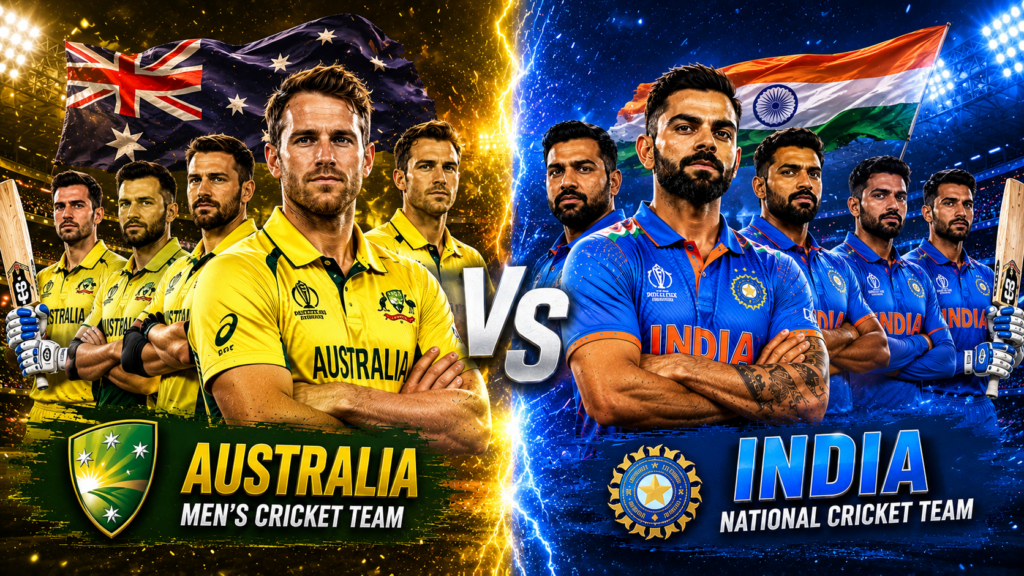
The rivalry between the Australian Men’s Cricket Team and India National Cricket Team has grown into one of the most intense battles in modern cricket. What began as a one-sided contest in the early years gradually evolved into a high-pressure clash filled with drama, skill, and unforgettable moments. Over decades, both teams have produced legendary performances across Tests, ODIs, and T20s, shaping the identity of world cricket. Every encounter brings tactical battles, emotional crowd reactions, and standout individual brilliance. From early dominance to modern-day competitiveness, this rivalry reflects the true spirit of international cricket and continues to capture global attention.
Recent Matches Table
| Match [1] | Date | Venue | Format | Winner | Margin | Player of the Match |
|---|---|---|---|---|---|---|
| 1st ODI | 19 October 2025 | Perth | ODI | Australia | 7 wickets | Mitchell Marsh |
| 2nd ODI | 23 October 2025 | Adelaide | ODI | Australia | 2 wickets | Adam Zampa |
| 3rd ODI | 25 October 2025 | Sydney | ODI | India | 9 wickets | Rohit Sharma |
| 2nd T20I | 31 October 2025 | Melbourne | T20I | Australia | 4 wickets | Matthew Short |
| 3rd T20I | 2 November 2025 | Sydney | T20I | India | 5 wickets | Tilak Varma |
| 4th T20I | 4 November 2025 | Gold Coast | T20I | India | 48 runs | Shubman Gill |
| 5th T20I | 8 November 2025 | Brisbane | T20I | No Result | Washout | None |
Team Statistics Summary Table
| Format | Total Matches | India Wins | Australia Wins | Ties | No Result | Win Percentage India |
|---|---|---|---|---|---|---|
| Test | 112 | 33 | 48 | 1 | 30 | 29.46 |
| ODI | 155 | 59 | 86 | 0 | 10 | 38.06 |
| T20I | 37 | 22 | 12 | 0 | 3 | 59.45 |
| Overall | 304 | 114 | 146 | 1 | 43 | 37.50 |
Individual Batting Records Table
| Player | Team | Matches | Runs | Highest Score | Average | Strike Rate |
|---|---|---|---|---|---|---|
| Rohit Sharma | India | 47 | 2332 | 209 | 45.72 | 98.45 |
| Virat Kohli | India | 53 | 2210 | 123 | 43.33 | 92.11 |
| Steven Smith | Australia | 42 | 1945 | 192 | 48.62 | 84.56 |
| Glenn Maxwell | Australia | 39 | 1540 | 120 | 39.48 | 146.22 |
| Shubman Gill | India | 18 | 845 | 112 | 52.81 | 102.34 |
| Travis Head | Australia | 22 | 912 | 137 | 45.60 | 115.10 |
| Marnus Labuschagne | Australia | 15 | 620 | 108 | 44.28 | 83.15 |
Individual Bowling Records Table
| Player | Team | Matches | Wickets | Best Bowling | Average | Economy |
|---|---|---|---|---|---|---|
| Ravichandran Ashwin | India | 32 | 112 | 7 for 103 | 27.12 | 2.94 |
| Mitchell Starc | Australia | 28 | 98 | 6 for 43 | 26.45 | 4.85 |
| Jasprit Bumrah | India | 25 | 78 | 5 for 54 | 24.15 | 4.10 |
| Adam Zampa | Australia | 24 | 44 | 4 for 60 | 31.25 | 5.35 |
| Josh Hazlewood | Australia | 22 | 68 | 5 for 8 | 25.80 | 3.65 |
| Mohammed Siraj | India | 16 | 38 | 4 for 46 | 28.92 | 5.12 |
| Kuldeep Yadav | India | 14 | 29 | 4 for 51 | 27.41 | 5.24 |
Early Encounters of the Rivalry
The beginning of competitive cricket between the two sides was marked by contrasting styles and approaches to the game. One team relied heavily on disciplined pace bowling and aggressive top-order batting, while the other focused on building innings patiently and adapting slowly to conditions. Early matches often showed a clear gap in experience, with one side dominating through superior fast bowling attacks and sharp fielding standards. However, over time, the underdog began to learn from repeated exposure and gradually reduced the margin of defeat. The intensity of competition increased as players started to respond with stronger batting performances and more controlled bowling spells. These early encounters laid the foundation for a rivalry that would grow in both technical quality and emotional pressure. Fans began to notice that matches between these teams were no longer one-sided but evolving into competitive battles where momentum could shift quickly.
| Match Type | Dominant Skill | Key Factor | Early Trend | Fan Response |
| Test | Fast Bowling | Bounce and swing | One-sided start | Low expectation |
| ODI | Batting Depth | Run consistency | Gradual competition | Growing interest |
| Venue | Home Advantage | Pitch familiarity | Strong home control | Local support |
| Fielding | Athleticism | Catching ability | Clear difference | Visible impact |
| Strategy | Basic plans | Limited analysis | Simple approach | Developing curiosity |
First Turning Points in Competition
As the rivalry progressed, certain matches began to shift perceptions dramatically. The underdog team started registering unexpected victories, especially in conditions that initially seemed unfavorable. These wins were not just statistical upsets but psychological breakthroughs that changed how both sides approached future contests. Key players emerged who could handle pressure situations and counter elite bowling attacks with confidence. Bowlers also began to find ways to challenge dominant batters through variations in pace and line. These turning points were crucial because they broke the mental barrier that had existed in earlier years. The matches became less predictable, and fans witnessed a growing belief that either side could win on a given day. Tactical adjustments, including changes in batting order and bowling rotations, started playing a more significant role in match outcomes.
| Match Phase | Key Change | Impact Player | Turning Moment | Outcome Shift |
| Middle overs | Batting aggression | Top-order batter | Quick partnerships | Momentum gain |
| Bowling spell | Variation use | Fast bowler | Wicket burst | Pressure increase |
| Field setup | Defensive shift | Captain | Tactical change | Control regained |
| Innings start | Strong opening | Opener | Fast scoring | Early advantage |
| Death overs | Controlled attack | Finisher | Late hitting | Score boost |
Rise of Modern Competitive Cricket
With the evolution of international cricket formats, the rivalry entered a new phase characterized by speed, precision, and data-driven strategies. Teams began analyzing opponents more deeply, focusing on weaknesses in specific overs and conditions. Batters adapted by increasing strike rates, while bowlers introduced new variations such as slower balls, reverse swing, and spin control in middle overs. Matches became more dynamic, with frequent shifts in momentum within short periods. Fitness levels improved significantly, allowing fielders to save crucial runs and create pressure through athletic performances. This era also saw the rise of players who could perform consistently across formats, making squad selection more complex and strategic. The overall quality of matches increased, and scorecards began reflecting higher totals and closer finishes.
| Era Factor | Improvement | Tactical Change | Key Skill | Match Effect |
| Batting | Higher strike rate | Power hitting | Timing | Faster scoring |
| Bowling | Variations | Slower deliveries | Accuracy | Wicket creation |
| Fielding | Athletic dives | Boundary saves | Reflex | Reduced runs |
| Fitness | Endurance | Longer spells | Stamina | Consistency |
| Strategy | Data use | Match planning | Analysis | Smarter play |
Iconic Test Battles and Classic Contests
Test matches between these sides became known for long battles, patience, and shifting dominance over five days. Batters were tested with relentless bowling spells, while bowlers had to maintain discipline for extended periods. Several matches turned on small partnerships or single spells of exceptional bowling. Captains played a crucial role in setting attacking fields and rotating bowlers effectively. These contests often produced drawn matches that felt like wins for both sides due to the intensity and effort involved. Crowd engagement was high, especially when matches reached final-day scenarios with uncertain outcomes. These Tests created some of the most memorable moments in cricket history, with individual performances standing out as defining highlights.
| Test Element | Key Performer | Match Impact | Turning Point | Result Influence |
| Batting | Top-order anchor | Long innings | Resistance | Stability |
| Bowling | Fast bowler | Wicket bursts | Breakthrough | Collapse |
| Spin | Control bowler | Middle overs | Pressure build | Slow scoring |
| Captaincy | Field setup | Strategy shift | Key decision | Advantage |
| Partnership | Middle order | Recovery stand | Momentum | Draw/save win |
ODI Tournament Clashes and Pressure Moments
Limited overs tournaments added a new layer of pressure, especially in global competitions where every ball carried significance. Matches often featured high scoring rates and aggressive batting from the start. Bowlers had to adapt quickly to changing conditions and maintain composure under pressure. Several encounters were decided in the final overs, where experience played a crucial role. Fielding errors and brilliant catches often changed match outcomes. These high-stakes games intensified the rivalry further, as elimination scenarios amplified emotional pressure for players and fans alike. Tactical decisions such as batting first or chasing became critical and often influenced the final result.
| ODI Factor | Key Influence | Pressure Point | Match Impact | Outcome Driver |
| Powerplay | Fast scoring | Early wickets | Momentum shift | Strong start |
| Middle overs | Rotation play | Dot balls | Control phase | Stability |
| Death overs | Big hitting | Final 10 overs | Run surge | Score boost |
| Fielding | Catch efficiency | Run saving | Tight margins | Win/loss |
| Toss | Decision making | Pitch reading | Strategy | Advantage |
T20 Era Fast-Paced Battles
The shortest format transformed the rivalry into a fast-moving contest where momentum could change in a single over. Batters attacked from the start, while bowlers relied heavily on variations and yorkers. Matches often featured explosive innings and rapid scoring bursts. Captains had to make instant tactical decisions, including bowling changes and field adjustments. The crowd experience became more intense due to constant action and unpredictability. Even small mistakes could decide the match, making every delivery crucial. The format highlighted the importance of finishing skills and death-over execution more than ever before.
| T20 Element | Key Skill | Match Moment | Impact Player | Result Effect |
| Powerplay | Aggression | Early boundaries | Opener | Quick lead |
| Middle overs | Control | Dot ball pressure | Spinner | Slowing run rate |
| Death overs | Precision | Yorkers/slower balls | Fast bowler | Defense success |
| Fielding | Reflex | Direct hits | Fielder | Run-outs |
| Finishing | Big hitting | Final overs | Finisher | Win seal |
Key Player Battles and Psychological Edge
Individual rivalries between star players added emotional depth to the competition. Fast bowlers targeted top-order batters with aggressive spells, while spinners tested patience in the middle overs. Batters responded with calculated aggression, trying to dominate bowlers early in their spells. Psychological pressure played a major role, with sledging and competitive body language often influencing momentum. Some players consistently performed well under pressure, becoming match-winners in crucial games. These one-on-one battles often shaped the overall outcome of matches and created lasting memories for fans. Over time, respect developed between players despite intense on-field competition.
| Player Duel | Strength Type | Battle Area | Key Moment | Match Influence |
| Batter vs Fast bowler | Power vs pace | Opening overs | Early wickets | Pressure build |
| Batter vs Spinner | Technique vs spin | Middle overs | Dot pressure | Control phase |
| Finisher vs Death bowler | Aggression vs yorkers | Final overs | Boundary hitting | Result change |
| Captain vs captain | Strategy | Field setting | Tactical move | Advantage shift |
| Fielder impact | Reflex | Boundary saves | Catch/run-out | Momentum swing |
Home and Away Performance Contrast
Conditions played a major role in shaping match outcomes between these teams. One side traditionally dominated at home due to familiarity with pitch behavior and crowd support. The other side often relied on pace-friendly conditions and bounce to gain advantage. Over time, both teams improved their adaptability, reducing the home advantage gap. Batters learned to handle swing and spin more effectively, while bowlers adjusted lengths based on surfaces. This balance made matches more competitive regardless of venue. Crowd influence remained significant, especially in tightly contested games where pressure situations decided results.
| Venue Factor | Home Team Advantage | Away Challenge | Key Adjustment | Performance Impact |
| Pitch type | Familiar bounce | Unfamiliar conditions | Technique change | Stability |
| Crowd | Strong support | Pressure environment | Mental strength | Focus |
| Weather | Known conditions | Adjustment needed | Planning | Strategy shift |
| Bowling | Controlled attack | Adaptation required | Variation | Wickets |
| Batting | Comfort zones | Defensive play | Patience | Survival |
Conclusion
The journey of matches between Australia and India highlights how cricket evolves through competition, resilience, and adaptation. From early mismatches to closely fought modern classics, both teams have pushed each other to higher standards. Memorable performances, record-breaking innings, and pressure-filled finishes have defined this rivalry across formats. Fans from both nations treat every encounter as more than just a game, making it a matter of pride and emotion. As new players emerge and strategies evolve, the rivalry continues to grow stronger. It remains a cornerstone of international cricket, promising even more thrilling chapters in the future.
FAQs
1. Why is the Australia vs India rivalry so famous?
Because both teams are highly competitive, with world-class players and closely fought matches across all formats.
2. Which format has produced the most memorable matches?
Test cricket, especially the Border-Gavaskar Trophy, has produced some of the most iconic contests.
3. Who has the upper hand historically?
Australia dominated early years, but India has become equally strong in modern cricket.
4. What makes this rivalry intense?
High-pressure situations, aggressive play, strong fan emotions, and frequent close finishes.
5. Do both teams perform differently at home and away?
Yes, home conditions strongly influence performance, but both teams have improved their overseas records significantly.