Table of Contents
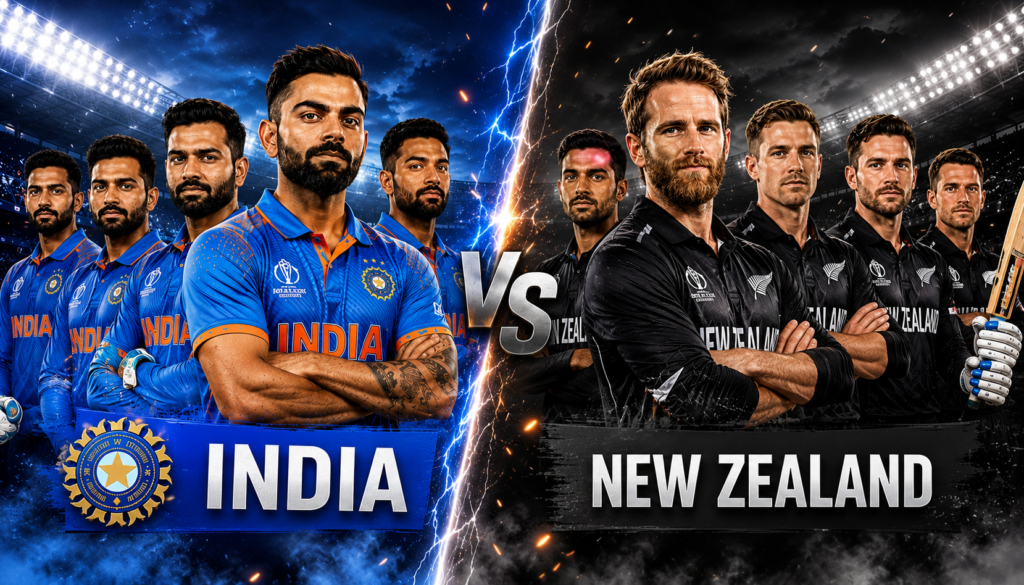
The story of India National Cricket Team Vs New Zealand National Cricket Team Players is far richer than a simple collection of scorecards and statistics. Across decades, players from both nations have produced unforgettable performances, dramatic contests, and moments that altered the direction of international cricket. While India has traditionally been known for batting legends and spin mastery, New Zealand has built its reputation on discipline, teamwork, and resilience.
From the era of Sunil Gavaskar and Richard Hadlee to modern icons such as Virat Kohli and Kane Williamson, the rivalry has consistently showcased world-class talent. Understanding the players behind these contests offers valuable insight into why India-New Zealand matches remain among the most respected battles in world cricket.
How India and New Zealand Developed a Respect-Based Cricket Rivalry
Unlike some cricket rivalries fueled by political or historical tensions, India and New Zealand have largely competed with mutual respect. Their contests have often been decided by tactical brilliance rather than emotional drama.
The first Test series between the two countries took place in the 1950s. Since then, generations of players have contributed to the rivalry’s growth. India generally enjoyed greater success at home, where spin-friendly pitches favored their strengths. New Zealand, meanwhile, often proved formidable in seaming conditions.
The rivalry evolved significantly after the 1990s. Professional fitness standards, advanced analytics, and the rise of limited-overs cricket created a new generation of specialists capable of changing matches within a few overs.
Key Rivalry Facts
| Category | India | New Zealand |
| Test Debut | 1932 | 1930 |
| First Bilateral Test Meeting | 1955 | 1955 |
| ICC World Test Championship Final Appearances | Multiple | Multiple |
| Cricket Strength | Batting & Spin | Seam Bowling & Discipline |
| Famous Modern Captains | Kohli, Rohit | Williamson |
These differences in cricketing philosophy have made contests particularly intriguing for fans and analysts alike.
Legendary India National Cricket Team Players Against New Zealand
Several Indian cricketers have built extraordinary records against New Zealand across formats.
Indian Icons in the Rivalry
| Player | Role | Notable Contribution |
| Sunil Gavaskar | Batter | Consistent run-scoring in Tests |
| Sachin Tendulkar | Batter | Dominated across formats |
| Rahul Dravid | Batter | Technical excellence |
| Virender Sehwag | Batter | Aggressive starts |
| Virat Kohli | Batter | Modern-era consistency |
| Rohit Sharma | Batter | Match-winning ODI innings |
Sachin Tendulkar’s performances against New Zealand demonstrated his adaptability. Whether facing swing in New Zealand or spin-friendly conditions in India, he consistently produced significant contributions.
Rahul Dravid’s patient approach often frustrated New Zealand bowlers. His ability to absorb pressure made him invaluable during challenging Test matches.
Virender Sehwag introduced a contrasting style. His attacking mindset disrupted bowling plans and frequently shifted momentum within sessions.
Virat Kohli later became one of the central figures in India-New Zealand contests. His ability to chase targets and score under pressure elevated the competitive standard of the rivalry.
New Zealan Players Who Consistently Challenged India
New Zealand’s cricketing history includes several players who repeatedly troubled Indian teams.
Greatest New Zealand Performers
| Player | Role | Legacy Against India |
| Richard Hadlee | Fast Bowler | Match-winning spells |
| Martin Crowe | Batter | Tactical brilliance |
| Stephen Fleming | Batter/Captain | Strategic leadership |
| Brendon McCullum | Batter | Aggressive cricket |
| Kane Williamson | Batter | Modern master |
| Trent Boult | Fast Bowler | Swing specialist |
Richard Hadlee remains one of the most influential cricketers in rivalry history. His bowling combined pace, movement, and accuracy, often exposing weaknesses in batting lineups.
Martin Crowe brought sophistication and innovation to New Zealand cricket. His batting and leadership helped transform New Zealand into a more competitive international side.
Stephen Fleming elevated tactical planning. Under his captaincy, New Zealand became known for maximizing available resources and consistently punching above their weight.
The modern era belongs largely to Kane Williamson, whose calm temperament and technical excellence have repeatedly challenged India’s bowlers.
Batting Giants Who Defined India vs New Zealand Matches
Many of the rivalry’s most memorable moments have come from exceptional batting performances.
Leading Batting Personalities
| Indian Players | New Zealand Players |
| Sachin Tendulkar | Kane Williamson |
| Virat Kohli | Martin Crowe |
| Rahul Dravid | Ross Taylor |
| Rohit Sharma | Stephen Fleming |
| Sehwag | Brendon McCullum |
Sachin Tendulkar’s longevity allowed him to face multiple generations of New Zealand bowlers. His success highlighted both skill and adaptability.
Ross Taylor deserves special recognition. Few overseas batters have enjoyed as much success against India. His ability to counter spin and pace alike made him one of New Zealand’s most dependable performers.
Virat Kohli and Kane Williamson emerged as defining figures of their generation. Their contrasting personalities—Kohli’s intensity and Williamson’s calmness—added another fascinating layer to the rivalry.
The consistency displayed by these players often proved more valuable than isolated centuries. They repeatedly delivered when their teams required stability.
Fast Bowlers Who Changed the Course of the Rivalry
While batting often attracts headlines, fast bowlers have frequently decided India-New Zealand contests.
Notable Pace Bowlers
| India | New Zealand |
| Kapil Dev | Richard Hadlee |
| Zaheer Khan | Shane Bond |
| Jasprit Bumrah | Trent Boult |
| Mohammed Shami | Tim Southee |
| Ishant Sharma | Neil Wagner |
Kapil Dev brought aggressive fast bowling to Indian cricket during an era when pace resources were limited.
Zaheer Khan emerged as a complete fast bowler capable of exploiting both swing and reverse swing. His performances against New Zealand showcased his tactical intelligence.
For New Zealand, Shane Bond represented raw pace and hostility. Injuries limited his career, but his impact against top batting lineups was immense.
Jasprit Bumrah and Trent Boult have become modern symbols of bowling excellence. Their contrasting styles demonstrate how pace bowling has evolved across generations.
The Influence of Captains on Player Performances
Captains often determine how successfully individual players perform. India and New Zealand have produced some of cricket’s finest leaders.
Influential Captains
| India | New Zealand |
| Sourav Ganguly | Stephen Fleming |
| MS Dhoni | Brendon McCullum |
| Virat Kohli | Kane Williamson |
| Rohit Sharma | Tim Southee |
Sourav Ganguly transformed India’s overseas mindset. His aggressive leadership encouraged players to compete fearlessly.
MS Dhoni introduced calm decision-making and tactical innovation. His ability to read match situations often proved decisive.
On the New Zealand side, Brendon McCullum revolutionized the team’s approach. He promoted attacking cricket and encouraged players to embrace positive intent.
Kane Williamson combined strategic clarity with remarkable composure. His leadership during major ICC tournaments significantly strengthened New Zealand’s global reputation.
Memorable Individual Battles Between Players
Cricket rivalries are often remembered through individual contests rather than entire matches.
Famous Player Matchups
| Batter | Bowler |
| Sachin Tendulkar | Richard Hadlee |
| Virat Kohli | Trent Boult |
| Rohit Sharma | Tim Southee |
| Kane Williamson | Jasprit Bumrah |
| Ross Taylor | Ravichandran Ashwin |
Virat Kohli versus Trent Boult has become one of the defining modern battles. Boult’s ability to swing the ball early tests Kohli’s technique and concentration.
Similarly, Kane Williamson’s contests against Jasprit Bumrah showcase elite cricketing skill. Both players excel in reading conditions and adapting quickly.
These matchups matter because they frequently influence the outcome of entire series rather than individual games.
World Test Championship Final and the Rise of Modern Heroes
The World Test Championship Final significantly elevated the profile of India-New Zealand cricket.
Key Contributors in the WTC Era
| India | New Zealand |
| Virat Kohli | Kane Williamson |
| Rohit Sharma | Devon Conway |
| Ravindra Jadeja | Kyle Jamieson |
| Jasprit Bumrah | Tim Southee |
| Mohammed Shami | Trent Boult |
New Zealand’s victory highlighted the importance of disciplined bowling and collective execution. Kyle Jamieson’s performances announced him as a major force in world cricket.
For India, despite defeat, players such as Rohit Sharma, Bumrah, and Jadeja reinforced their status among the world’s elite cricketers.
The final also symbolized how evenly matched the two teams had become in the modern era.
Emerging Players Shaping the Future of the Rivalry
Every rivalry evolves through fresh talent. The next chapter of India versus New Zealand cricket is already being written.
Rising Stars
| India | New Zealand |
| Shubman Gill | Rachin Ravindra |
| Yashasvi Jaiswal | Will Young |
| Arshdeep Singh | Ben Sears |
| Rinku Singh | Glenn Phillips |
| Kuldeep Yadav | Mitchell Santner |
Shubman Gill’s elegant stroke play suggests he could become one of India’s defining batters for the next decade.
Rachin Ravindra has generated enormous excitement in New Zealand cricket. His all-round abilities provide balance and flexibility.
Glenn Phillips represents the modern multi-dimensional cricketer—capable of explosive batting, athletic fielding, and useful bowling.
These emerging players ensure the rivalry remains relevant and competitive in the years ahead.
Why Player Development Differs Between India and New Zealand
One of the most fascinating aspects of this rivalry is the contrast in player development systems.
India benefits from an enormous talent pool and a highly competitive domestic structure. The depth of competition means players often arrive at the international level already experienced in pressure situations.
New Zealand, by contrast, operates with a smaller player base. As a result, versatility becomes essential. Many New Zealand players contribute across multiple disciplines and develop strong tactical awareness.
This difference explains why Indian teams often feature specialist match-winners, while New Zealand teams frequently excel through collective execution.
Neither model is inherently superior. Instead, they create distinct cricketing identities that enrich the rivalry.
The Lasting Legacy of India National Cricket Team Vs New Zealand National Cricket Team Players
The history of India National Cricket Team Vs New Zealand National Cricket Team Players is ultimately a story of excellence, adaptation, and mutual respect. Across generations, players have elevated the rivalry through remarkable performances, tactical innovation, and unforgettable moments.
From the mastery of Sachin Tendulkar and Richard Hadlee to the modern brilliance of Virat Kohli and Kane Williamson, each era has introduced new heroes and fresh narratives. Fast bowlers, captains, all-rounders, and specialist batters have all played critical roles in shaping the contest.
As emerging stars such as Shubman Gill and Rachin Ravindra continue their rise, the future promises even more memorable chapters. The enduring appeal of India National Cricket Team Vs New Zealand National Cricket Team Players lies not merely in wins and losses, but in the extraordinary individuals who have made this rivalry one of cricket’s most respected and compelling stories.
FAQ
Who is the most successful Indian batter against New Zealand?
Sachin Tendulkar is widely regarded as one of India’s most successful batters against New Zealand. Across formats, he consistently scored runs in varying conditions and against different generations of bowlers. His adaptability allowed him to thrive both in India and New Zealand. Beyond statistics, Tendulkar’s influence came from his ability to anchor innings and deliver crucial performances in important matches.
Who is New Zealand’s greatest player against India?
Richard Hadlee is often considered New Zealand’s greatest performer against India. His exceptional bowling skill, accuracy, and ability to exploit conditions made him a constant threat. Hadlee frequently delivered match-winning spells and set standards that future New Zealand fast bowlers aimed to follow. His impact extended beyond numbers and helped establish New Zealand as a respected cricketing nation.
Which captain had the biggest influence on the rivalry?
Several captains shaped the rivalry, but MS Dhoni, Sourav Ganguly, Stephen Fleming, and Kane Williamson stand out. Ganguly changed India’s competitive mindset, while Dhoni brought tactical excellence. Fleming enhanced New Zealand’s consistency, and Williamson guided the team through one of its most successful eras. Their leadership styles differed significantly but each contributed lasting influence.
Why are India and New Zealand matches often closely contested?
The rivalry is competitive because both teams possess contrasting strengths. India traditionally relies on batting depth and spin bowling, while New Zealand emphasizes seam bowling, discipline, and teamwork. These differences create tactical battles where conditions often play a significant role. The balance between styles frequently produces closely fought contests across all formats.
Who are the most important modern players in this rivalry?
Virat Kohli, Rohit Sharma, Kane Williamson, Trent Boult, Jasprit Bumrah, and Ravindra Jadeja have been among the most influential modern players. Their performances in bilateral series and ICC events have defined recent chapters of the rivalry. They consistently deliver under pressure and often determine match outcomes through individual brilliance.
Which young players could dominate future India-New Zealand contests?
Shubman Gill, Yashasvi Jaiswal, Rachin Ravindra, Glenn Phillips, Arshdeep Singh, and Ben Sears are among the players expected to shape future encounters. Their skill sets suit modern cricket’s demands, and early performances suggest they could become central figures in the rivalry over the next decade.