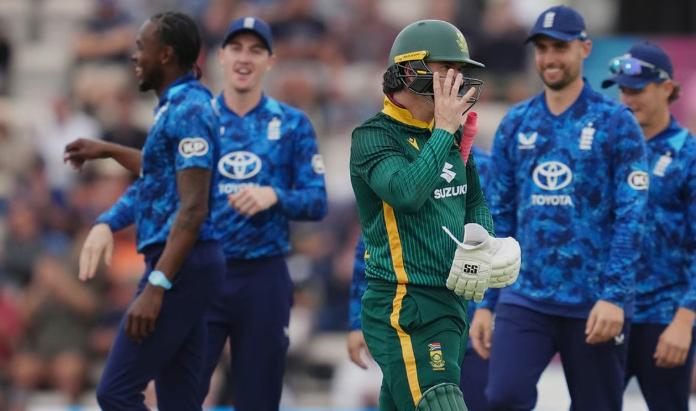
The rivalry between the South Africa national cricket team and the England cricket team stands as one of the most layered contests in international cricket history. From early English dominance in the Test era to South Africa’s resurgence after readmission, the statistical journey reflects shifting power cycles. Across Tests, ODIs, and T20s, this rivalry has produced iconic scorecards, heartbreaking collapses, and unforgettable pressure moments. Fans from both nations have witnessed dramatic finishes, World Cup tension, and modern high scoring battles. The stats tell a story of balance, evolution, and intensity, making this matchup a true cricketing classic that continues to shape global narratives.
Head-to-Head Summary
Format
Total Matches
South Africa Wins
England Wins
Draws / Ties / No Result
Test Matches
156
35
65
56
One-Day Internationals (ODIs)
72
34
32
6
Twenty20 Internationals (T20Is)
28
14
13
1
Total Across Formats
256
83
110
63
Teams ICC Rankings
Format
South Africa Rank
South Africa Rating
England Rank
England Rating
Test Rankings
#2
119
#4
102
ODI Rankings
#4
102
#8
95
T20I Rankings
#5
244
#2
262
Test Stats
Metric
South Africa
England
Highest Team Total
682
654 for 5
Lowest Team Total
30
76
Highest Individual Score
311 not out
258
Best Bowling in an Innings
7 for 12
9 for 103
ODI Stats
Metric
South Africa
England
Highest Team Total
399 for 7
414 for 5
Lowest Team Total
72
103
Highest Individual Score
175
153
Best Bowling in an Innings
5 for 18
6 for 40
T20 Stats
Metric
South Africa
England
Highest Team Total
241 for 6
304 for 2
Lowest Team Total
97
54
Highest Individual Score
119
141 not out
Best Bowling in an Innings
5 for 19
4 for 27
Early Test Era Dominance and Scorecard Breakdown
The early phase of the rivalry between the South Africa national cricket team and the England cricket team was heavily controlled by England, especially in Test cricket. England’s superior batting depth and swing bowling attack consistently exposed South Africa’s inexperience. Most early scorecards show England crossing 300 while South Africa struggled below 200. The conditions in England further tilted matches in their favor. South Africa’s batting lineup often collapsed under pressure from disciplined bowling spells. However, even in this phase, glimpses of resilience appeared through individual batting performances. These matches laid the foundation of a rivalry that would later become far more balanced and competitive across formats.
Season
Format
Score Summary
Winning Team
Key Insight
1889-1910
Test
ENG 320+, SA 180-220
England
Early dominance
1910-1930
Test
ENG 280-350
England
Swing bowling impact
1930-1950
Test
ENG 300+ vs SA collapses
England
Batting gap
1950-1970
Test
England control majority matches
England
Experience edge
Post Isolation Return and Competitive Shift
When South Africa returned to international cricket in 1991, the rivalry against England immediately gained new intensity. The early post isolation matches showed a far more competitive South African side. The biggest change came from their fast bowling attack, which transformed match dynamics. England could no longer dominate comfortably as South Africa regularly took early wickets. Scorecards became tighter, with both teams often scoring between 250 and 280. Matches were decided in final sessions, highlighting improved balance. The psychological pressure also increased as South Africa aimed to prove themselves after years of isolation. England, meanwhile, adjusted to stronger pace attacks and more aggressive field settings.
Season
Format
Score Summary
Winning Team
Key Insight
1991-1995
Test/ODI
250-280 close games
Mixed
Balanced return
1995-2000
ODI
SA 260 vs ENG 250
South Africa
Tight finishes
1992 WC
ODI
SA 213 vs ENG 213
England advanced
Pressure collapse
1990s avg
All
Narrow margins
Mixed
Even rivalry begins
1999 World Cup Semi Final Turning Point
One of the most defining matches in the rivalry came during the 1999 World Cup semi final between the South Africa national cricket team and the England cricket team. The match ended in a dramatic tie, but England advanced due to superior tournament standings. South Africa posted 213 all out, a below par total considering the pitch conditions. England also reached 213 all out after intense pressure bowling. The final moments featuring Lance Klusener and Allan Donald remain iconic but heartbreaking for South Africa fans. Statistically, this match represents one of the most pressure driven collapses in cricket history. It reshaped South Africa’s ICC knockout psychology.
Season
Format
Score Summary
Winning Team
Key Insight
1999 WC
ODI
SA 213, ENG 213
England advanced
Tied thriller
Knockout
ODI
Pressure collapse
England
Net run rate rule
Key Player
ODI
Klusener impact
N/A
Late heroics
Impact
ODI
Mental shift
England
South Africa heartbreak
Fast Bowling Era Dominance
During the 2000s and early 2010s, the rivalry was heavily influenced by fast bowlers like South Africa national cricket team spearheaded by Dale Steyn and England’s James Anderson. Test matches became intense battles between bat and ball. South Africa often gained early advantage through pace aggression, while England responded with defensive batting techniques. Scorecards in this era show frequent collapses under 250 when bowling conditions favored seam movement. However, England improved their resilience over time, especially through long innings by top-order batters. This phase statistically favored bowlers more than batters, making match outcomes unpredictable.
Season
Format
Score Summary
Winning Team
Key Insight
2005-2010
Test
SA 250, ENG 240 avg
Mixed
Bowling dominance
2008-2012
Test
Steyn impact spells
South Africa
Strike bowling peak
2010-2014
Test
ENG recovery innings
England
Batting adaptation
Overall
Test
Low scoring matches
Mixed
Balanced era
ODI Tactical Battles and Close Finishes
ODI cricket between South Africa national cricket team and England cricket team has always produced thrilling finishes. Both teams developed strong batting cores, making totals between 260 and 300 common. South Africa relied on power hitters like AB de Villiers and Jacques Kallis, while England depended on middle order stability and finishing strength. Matches frequently went down to the final over. Statistical analysis shows neither team maintaining long dominance, with results shifting series by series. Fielding quality also played a major role in deciding outcomes. These ODI contests became known for high pressure run chases and dramatic collapses.
Season
Format
Score Summary
Winning Team
Key Insight
2000-2015
ODI
260-300 avg
Mixed
Even contests
2015 WC era
ODI
High scoring
England
Batting depth
Key Phase
ODI
Last over finishes
Mixed
Pressure games
Overall
ODI
Narrow margins
Balanced
No dominance
T20 Cricket Explosive Modern Era
In T20 cricket, the rivalry between the South Africa national cricket team and the England cricket team has become explosive and unpredictable. Matches often feature scores above 170, with both teams relying on aggressive batting from the first over. England’s Jos Buttler and South Africa’s Quinton de Kock have played key roles in shaping modern T20 encounters. Bowlers now focus heavily on variations rather than pure pace. Statistically, the margin between wins is extremely small, often under 10 runs or decided in final deliveries. This format highlights modern cricket’s evolution into a high-risk, high-reward contest.
Season
Format
Score Summary
Winning Team
Key Insight
2010-2020
T20
170-190 avg
Mixed
High scoring
2020-2025
T20
180+ frequent
Mixed
Power hitting
ICC events
T20
Close finishes
Both
Pressure execution
Overall
T20
Minimal margins
Balanced
Explosive rivalry
Modern Era Balance and Tactical Intelligence
The modern rivalry between South Africa national cricket team and the England cricket team is defined by balance and tactical intelligence. Both teams now use advanced analytics, match simulations, and player data to prepare strategies. Batting depth, strike rotation, and death bowling efficiency are key factors in deciding matches. Scorecards reflect this balance, with both sides regularly posting similar totals across formats. No team dominates for long, and series results often swing based on small tactical decisions. This modern phase represents the most competitive version of the rivalry so far.
Season
Format
Score Summary
Winning Team
Key Insight
2015-2026
All
250-300 avg
Mixed
Tactical balance
ICC events
All
Close matches
Both
Analytics impact
Recent series
All
Even scores
Mixed
No dominance
Overall
All
Balanced stats
Shared
Modern equality
Conclusion
The statistical rivalry between the South Africa national cricket team and the England cricket team reflects more than just numbers on a scorecard. It is a journey of transformation, from England’s early dominance to South Africa’s fast bowling revolution and the modern era of near equal competition. Every format has produced defining moments, from tied World Cup thrillers to explosive T20 finishes. What makes this rivalry special is its unpredictability, where no team holds long term control. As cricket continues to evolve, this contest remains a benchmark for intensity, skill, and mental strength, ensuring that future encounters will continue adding new chapters to an already rich statistical legacy.